
What makes a couples chore chart actually work?
The chart must show ownership, frequency and the definition of done. A list that only says “kitchen” still leaves one person deciding when it needs attention, remembering supplies and asking whether it was finished.
Ownership means one person is responsible for noticing, planning and completing the chore. Their partner can still help, but help should not require the other person to manage the process.
Free weekly chore chart template
Copy this structure into a shared note, print the page, or use it as the starting list in Tandem. Replace the example owners and days with your own.
| Responsibility | Owner | When | Done means | Status |
|---|---|---|---|---|
| Kitchen reset | Alex | Mon / Wed / Fri | Dishes, counters and sink cleared | □ |
| Laundry | Mia | Saturday | Washed, dried, folded and put away | □ |
| Groceries | Alex | Thursday | List checked and essentials restocked | □ |
| Bathroom clean | Mia | Sunday | Sink, toilet, shower, mirror and floor | □ |
| Pay household bills | Alex | 1st of month | Paid and recorded | □ |
| Plan next week's meals | Mia | Sunday | Five dinners chosen and list updated | □ |
| Pet care supplies | Alex | Check Friday | Food and medication stocked for 7 days | □ |
| Weekly household review | Both | Sunday, 18:00 | Next week reviewed and exceptions agreed | □ |
| □ | ||||
| □ |
Step 1: list the work before dividing it
Most chore systems feel unfair because the list is incomplete. Cleaning is visible; noticing that detergent is low, booking a repair and remembering a family birthday are easy to miss.
Daily reset
- Dishes and kitchen surfaces
- Cooking and packed lunches
- Pet feeding or walks
- Quick clutter reset
Weekly cleaning
- Bathroom and floors
- Laundry and bedding
- Bins and recycling
- Grocery shopping
Household admin
- Bills and subscriptions
- Appointments and forms
- Maintenance and repairs
- Tracking shared supplies
Planning and care
- Meals and social plans
- Gifts and family dates
- Travel preparation
- Noticing what needs attention
Step 2: choose one owner for each responsibility
Start with preference and availability rather than assumptions. One partner may dislike laundry but enjoy cooking. The other may have more time on weekday mornings but less on weekends.
Use four questions for each responsibility:
- Who prefers or minds this task less?
- Whose schedule fits the task's timing?
- Does the total weekly load still feel fair?
- Can the owner complete it without reminders or supervision?
A shared owner should be rare. “Both” works for a five-minute review you intentionally do together. It is usually unclear for chores like vacuuming, paying a bill or booking an appointment.
Step 3: define what done means
Different standards create repeated conflict. One person thinks “clean the kitchen” means loading the dishwasher; the other expects clear counters, a wiped sink and the bin emptied.
Write a short completion standard for chores that have caused confusion:
- Laundry: washed, dried, folded and put away
- Groceries: shared list checked, essentials purchased and food stored
- Bathroom: sink, mirror, toilet, shower and floor cleaned
- Pay bills: payment completed and shared expense recorded
The definition is not a way to inspect your partner. It removes the need for inspection by making the agreement clear in advance.
Step 4: give each chore a realistic rhythm
Not everything belongs on a weekly chart. Separate work by frequency so the list does not become noise:
Daily
Kitchen reset, pet care, cooking and a short clutter reset.
Weekly
Groceries, laundry, bathroom, floors, bins and meal planning.
Monthly or seasonal
Bills review, filters, deep cleaning, car maintenance, subscriptions and home repairs.
From chart to shared habit
Keep ownership visible in Tandem
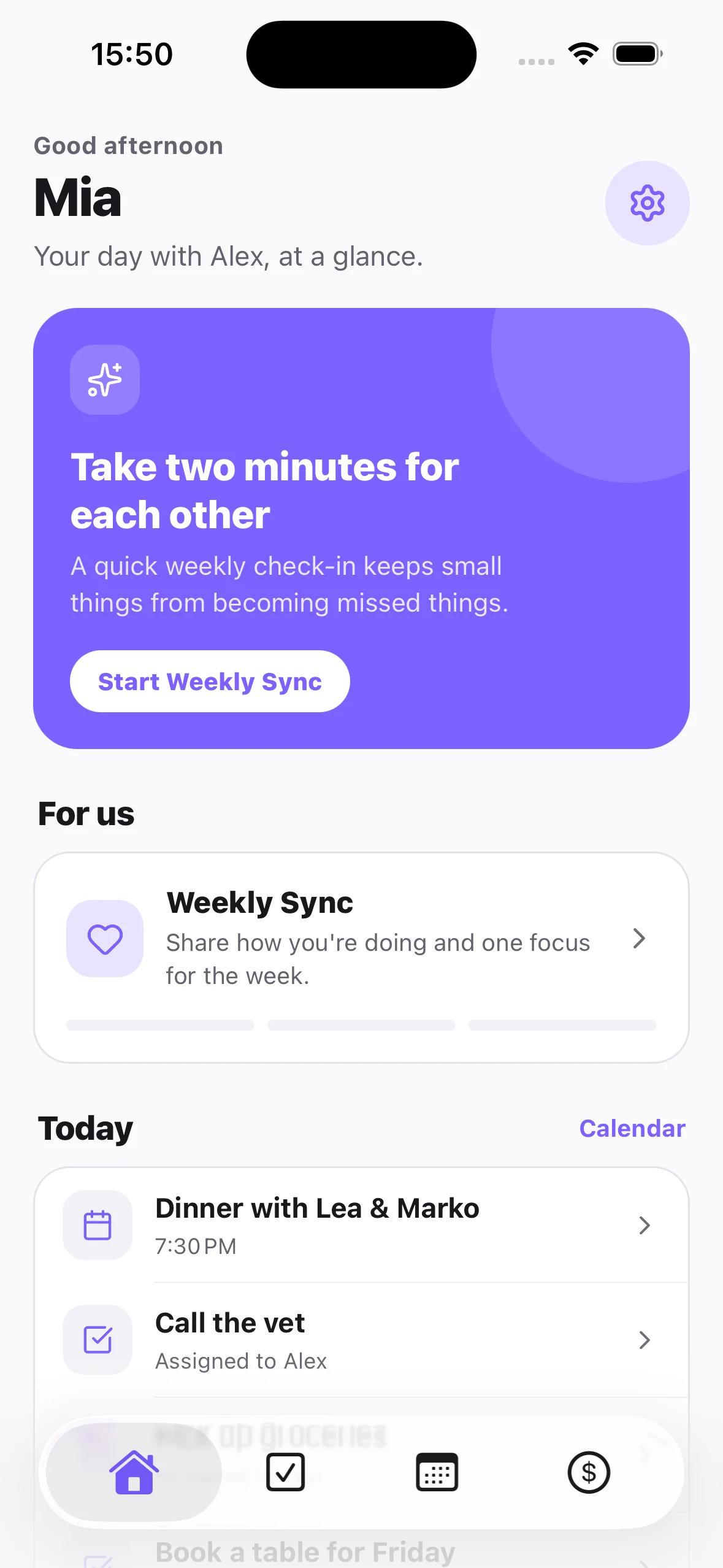
A paper chart is useful for agreeing on the system. Tandem keeps the live version with both partners: shared lists, clear assignees, priorities and completion updates from either phone.
- Create a dedicated Household or Weekly Reset list
- Assign each responsibility to one partner
- Use priorities for the tasks that matter this week
- See today's shared work from Home
- Reassign when travel, health or workload changes
Step 5: hold a five-minute weekly reset
A chart becomes outdated when work schedules, travel, health or energy change. Use five minutes at the same time each week:
- Notice what was repeatedly missed.
- Ask whether the problem was ownership, timing or an unrealistic standard.
- Reassign only what needs to change.
- Add one unusual task for the coming week.
- Thank each other for one piece of work that would otherwise stay invisible.
This is a systems review, not a performance review. Talk about the chart as something both of you are improving together.
Three fair ways to divide chores
Preference-based ownership
Each person owns the chores they dislike least or do most naturally. This is efficient, but review the total time and mental load so one partner does not quietly inherit all planning.
Schedule-based ownership
Divide work around who is available. One partner handles weekday resets; the other owns weekend errands. This works well for shift work and changing schedules.
Rotation
Rotate unpopular or similarly skilled chores weekly or monthly. Avoid rotating everything: constant switching creates more coordination than it saves.
Common chore-chart mistakes
- Listing only cleaning. Include planning, supplies, appointments and maintenance.
- Assigning “both.” Give one person ownership unless the task is intentionally done together.
- Confusing help with ownership. The owner should not need the other person to notice, plan and remind.
- Using the chart to keep score. Review the total load and current capacity instead of counting individual checkmarks.
- Never updating it. A fair system in January may not be fair after a job change in March.
- Adding too many notifications. Keep reminders for time-sensitive work; a noisy system will be ignored.
Turn your chore chart into a shared system both partners carry. Download Tandem free on iOS or Android, invite your partner and create your Household list.
Frequently asked questions
How should couples divide household chores?
List all visible and invisible work first. Then assign one owner based on preference, schedule, capacity and frequency. Check whether the total load feels fair to both people.
Should chores always be split 50/50?
No. A fair arrangement can change from week to week. The goal is shared understanding and an equitable total load, not a mathematically identical number of tasks every day.
What belongs on the chart?
Cleaning, cooking, laundry, errands, bills, appointments, maintenance, pet care, supplies, social planning and the mental work of remembering and scheduling those responsibilities.
How often should we review it?
Do a five-minute check once a week and a deeper rebalance once a month. Update it immediately after a meaningful schedule, health or workload change.